
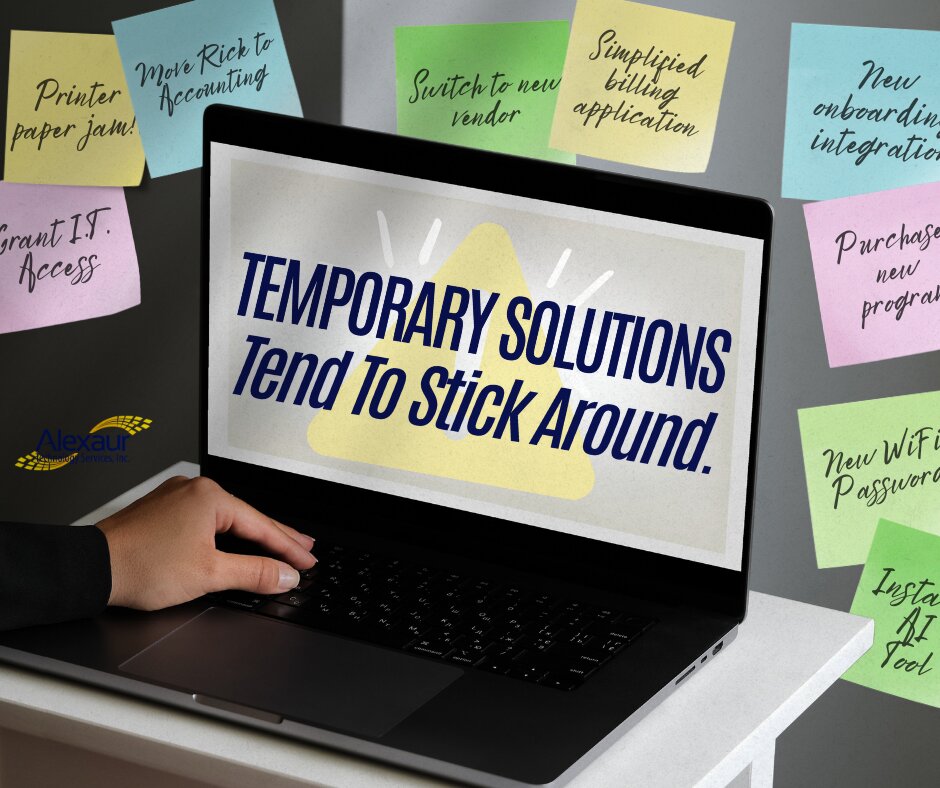
January often starts with clear goals, new projects, and plans for growth. Fast forward to the middle of the year, many Houston businesses have hired employees, adopted new software, expanded operations, and adjusted processes to keep pace with demand.
While growth is a positive sign, every change leaves behind a technology footprint. New users gain access to systems, additional applications are introduced, data gets stored in more places, and responsibilities become less defined.
By summer, many businesses are operating on assumptions about their IT environment rather than facts. If it's been several months since you've reviewed your technology infrastructure, cybersecurity protections, and disaster recovery plans, now is the perfect time for a midyear IT checkup.
1. Has User Access Been Reviewed Since It Was Granted?
When a new employee joins your organization, access is typically provided quickly so they can get to work. As employees change roles, take on new responsibilities, or assist with special projects, additional permissions are often added.
What rarely happens is a review of those permissions afterward.
Over time, this can create significant security risks:
- Employees may have access to systems they no longer need.
- Former employees could still have active accounts.
- Administrative privileges may be assigned more broadly than necessary.
- Management may lack visibility in who can access sensitive company data.
For business owners concerned about cybersecurity, reviewing user permissions is one of the simplest and most effective ways to reduce risk. Ask yourself: If someone requested a list of everyone who can access your critical systems today, could you provide it confidently?
2. Are Your Business Applications Working Together?
Over the past six months, your organization may have implemented new tools to improve efficiency.
Perhaps your sales team adopted a CRM platform. Marketing added automation software. Accounting implemented a new financial system. Operations began using project management applications.
Individually, these decisions make sense. Collectively, they can create unexpected challenges. As businesses grow, data often becomes scattered across multiple systems. Integrations are configured quickly and rarely revisited. Departments develop their own processes and workarounds when applications don't communicate effectively.
The result is often:
- Duplicate data entry
- Inconsistent reporting
- Reduced visibility across departments
- Increased operational inefficiencies
Many companies discover these issues only after they begin impacting productivity and decision-making. A good question to ask is: Are your systems truly integrated, or has your team simply learned to work around the gaps?
3. Are You Certain Your Backups Will Actually Restore?
Most business owners know they have backups. Far fewer know exactly how quickly they can recover if disaster strikes.
Whether it's a ransomware attack, server failure, accidental deletion, or a hurricane-related disruption common in the Houston area, recovery capability matters far more than simply having backup files.
Unfortunately, many organizations operate under assumptions such as:
"Our backups run every night." "Our IT provider handles that." "We've never had a problem before."
The real question is whether recovery has been tested. Can critical applications be restored quickly? How long would employees be unable to work? Who is responsible for initiating the recovery process? When disaster occurs, uncertainty becomes expensive.
Houston businesses that prioritize business continuity and disaster recovery regularly test their backup systems and maintain documented recovery procedures long before they're needed.
4. Has Technology Ownership Become Unclear?
As companies grow, technology responsibilities often become fragmented.
A cloud vendor manages one platform. An internal employee oversees another. Your IT provider handles infrastructure. Various software vendors support their own applications. Initially, responsibilities may seem clear. Over time, however, ownership becomes less defined.
When issues arise, questions emerge:
- Who is responsible for troubleshooting?
- Which vendor owns the problem?
- Who coordinates communication between providers?
- Who ensures the issue gets resolved?
Without clear accountability, problems often bounce between vendors, projects to stall, and critical issues remain unresolved longer than necessary. For business leaders, knowing exactly who owns each technology function is essential to maintaining operational efficiency.
If a critical system failed today, would your team immediately know who is responsible for leading the response?
The Biggest Technology Risks Are Often Hidden in Change
Most technology problems don't originate from broken equipment or major cyberattacks. They develop gradually as businesses evolve. New employees are added. Software platforms change. Permissions accumulate. Responsibilities shift. Backup systems age. Documentation becomes outdated.
The organizations that avoid costly disruptions are typically the ones that periodically step back and reassess their technology environment. They know exactly who has access to critical systems, how their data is protected, whether backups can be restored successfully, and who owns each technology responsibility. That level of visibility allows businesses to grow confidently while minimizing risk.
Schedule Your Midyear Technology Review
If you're unsure whether your IT environment still supports your business goals, now is the ideal time for a technology review.
At Alexaur Technology Services, we help Houston-area businesses identify security gaps, improve operational efficiency, strengthen disaster recovery readiness, and ensure technology supports continued growth. A brief discovery call can provide valuable insight into where your systems stand today and what may need attention before small issues become expensive problems.
Contact Alexaur Technology Services by scheduling a discovery call to learn how proactive IT support can help your Houston business stay secure, productive, and prepared for whatever comes next.