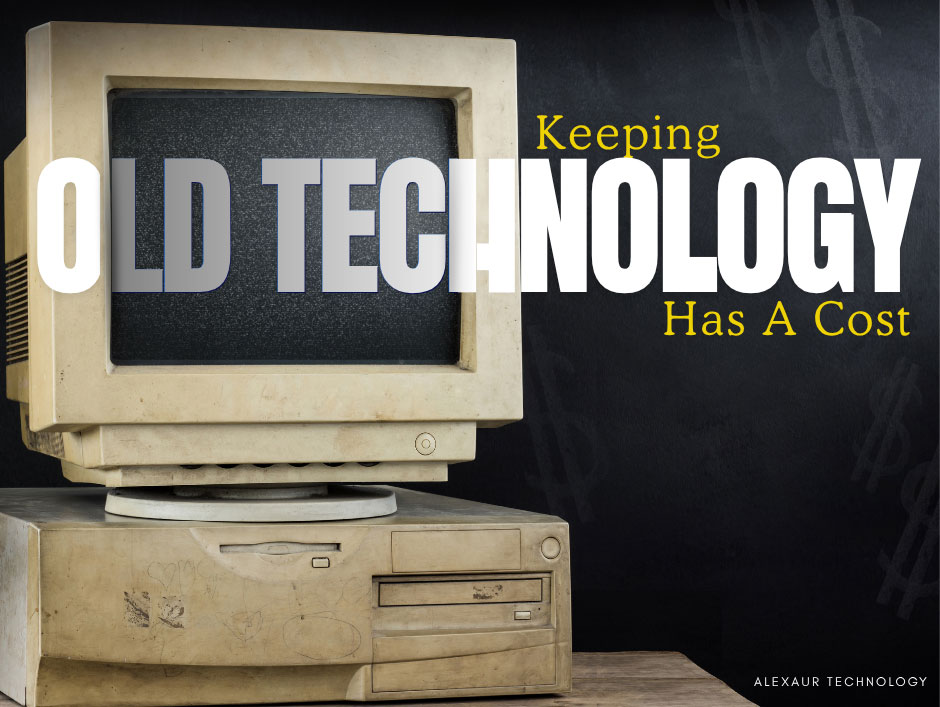
Most businesses don’t replace outdated technology until something completely breaks. If the computer still turns on, the server still runs, or employees can still “make it work,” it feels easier to keep using it a little longer. At first, the problems seem minor. A computer takes longer to boot up. Files load slowly. Programs freeze for a few seconds before responding. Employees restart devices more often than they should. Systems lag during busy parts of the day.
None of it feels serious enough to stop operations, but over time, outdated technology starts creating hidden costs that affect productivity, efficiency, and even operating expenses every single month. For many businesses, aging technology often becomes an ongoing drain on both time and money long before it fully fails.
The Hidden Costs of Outdated Technology
Holding onto older systems can seem like the financially responsible decision. Why replace something that still technically works? The problem is that aging technology doesn’t stay efficient forever. As hardware and software age, businesses begin paying for that outdated equipment in ways that are easy to overlook day to day.
Rising Energy Costs From Older Equipment
Older computers, servers, and networking equipment often consume far more energy than modern systems. As technology ages, it becomes less efficient, and during the intense summer heat in Houston, inefficient technology can increase operational costs even further by adding extra strain to office cooling systems.
Modern business technology is designed to operate faster while using less energy, helping businesses lower long-term operating expenses and improve overall performance at the same time.
Slow Systems Quietly Reduce Productivity
One of the biggest hidden costs of outdated technology is lost productivity. When systems become slower over time, employees naturally begin adjusting their workflows around the delays.
What used to take seconds now takes minutes, and routine tasks take longer than they should. Work still gets completed, but it takes more time and more frustration to get there.
For growing businesses in the greater Houston area, those small delays compound quickly across entire teams, reducing efficiency and slowing operations every day.
Constant Interruptions Hurt Focus and Efficiency
Outdated systems also create constant interruptions that many businesses start treating as “normal.” Employees restart computers. Internet connections randomly drop. Software crashes unexpectedly. Printers stop responding. Temporary fixes become part of the daily routine.
Even short interruptions break employee focus and momentum. Over time, these disruptions impact productivity, employee frustration levels, customer response times, operational efficiency, and overall workflow consistency. What feels like a few minutes here and there can quietly add up to hours of lost productivity every single week.
What Happens When Businesses Upgrade the Right Technology
When businesses finally address aging systems and recurring technology issues, the improvement is often immediate. Modern, properly maintained systems help businesses:
- Start and run faster without delays
- Eliminate constant restarts and temporary workarounds
- Improve employee productivity and focus
- Reduce downtime and interruptions
- Lower energy consumption with more efficient equipment
- Create a smoother, more reliable work environment
Instead of employees working around technology limitations, the technology begins supporting the business the way it should.
How Houston Businesses Can Avoid Overpaying for Outdated IT
The goal isn’t replacing every device unnecessarily.
Smart IT planning focuses on identifying which systems are creating the biggest risks, inefficiencies, and ongoing costs, then upgrading strategically.
At Alexaur Technology Services, we help businesses throughout Houston, Katy, and surrounding communities evaluate their technology and create practical upgrade plans that improve performance without overspending.
We help businesses:
- Identify systems that are costing more than they’re worth
- Prioritize upgrades based on business impact and risk
- Recommend right-sized solutions instead of unnecessary replacements
- Handle transitions with minimal disruption to employees
- Maintain systems proactively to avoid future issues
Is Your Business Paying for Technology Problems Every Month?
If your employees constantly deal with slow systems, recurring issues, or daily technology frustrations, your business is already paying the price, whether it’s through lost productivity, higher operating costs, or unnecessary downtime.
The question is how much longer you want those hidden costs affecting your business. Outdated technology rarely fixes itself. The longer it stays in place, the more expensive the inefficiency becomes.
If you’re ready to improve performance, reduce disruptions, and stop overpaying for aging systems, schedule a discovery call today and let’s identify which technology issues are worth fixing, replacing, or proactively managing before they become larger business problems.