
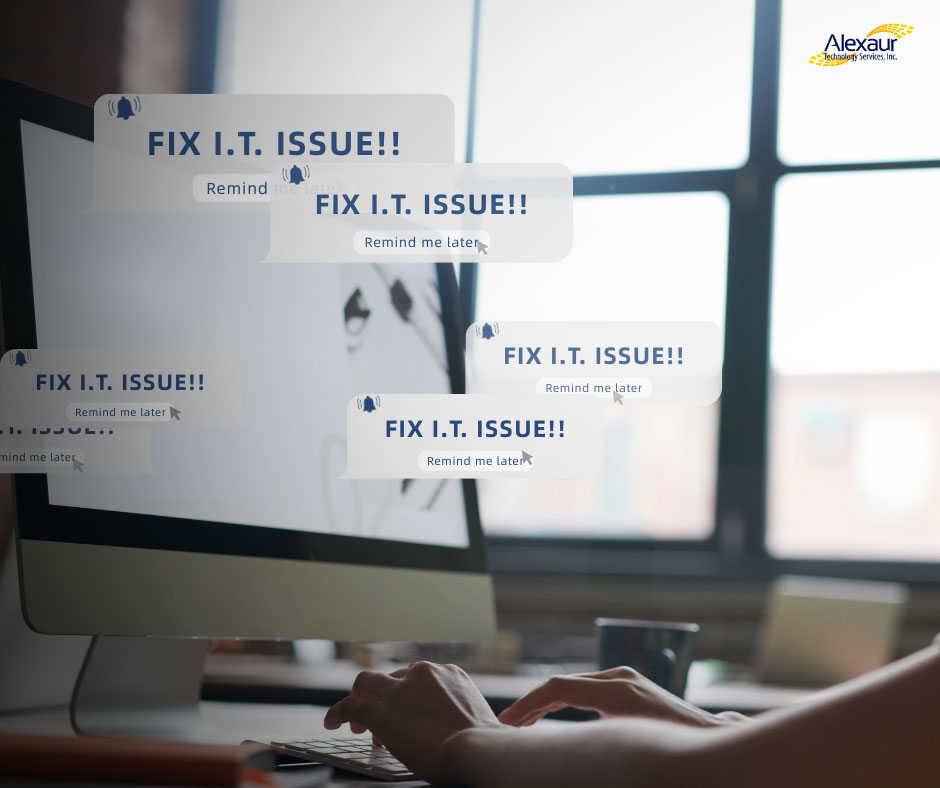
For many businesses, technology problems rarely appear all at once. Instead, they start quietly. A computer runs a little slower than usual, an update notification gets ignored, a backup warning appears but doesn’t seem urgent. Since everything is technically still working, the issue gets pushed aside for another day.
At the time, it doesn’t feel like a major problem, but small IT issues have a way of growing in the background and when they finally surface, they usually do it at the worst possible moment. For businesses across Houston, Katy, and Sealy, summer often makes those disruptions even more difficult to manage.
With employees taking vacations, leaner staffing schedules, and key decision-makers out of the office, even routine technology issues can quickly turn into full-scale operational fire drills.
Why Small IT Problems Become Big Business Disruptions
Reactive IT support often creates a false sense of security. If nothing is actively broken, it’s easy to assume the issue can wait. But technology problems rarely remain contained. Systems continue to deteriorate quietly until the disruption becomes impossible to ignore. And when one issue finally surfaces, several others often appear alongside it. That’s when productivity slows down, employees lose valuable time, and your team shifts from doing their jobs to troubleshooting technology.
Here are some of the most common IT problems we see escalate for Houston-area businesses.
The “It’s Just Running Slow” Problem
Most system failures don’t happen overnight.
They usually begin with small signs that something isn’t working correctly:
- Applications taking longer to open
- Delayed logins
- Lagging file access
- Random freezing or crashes
- Employees constantly refreshing programs or restarting devices
Because work can continue, nobody treats the issue as urgent. Over time, employees adapt to the slowdown and accept it as part of the workday.
Until the day the system stops working entirely.
Now your team can’t access critical files or applications, productivity stalls, and employees begin trying to troubleshoot the issue themselves. If the primary IT contact is unavailable or out of office, the downtime stretches even longer.
What could have been resolved early with proactive monitoring now becomes a company-wide disruption.
The Update That Keeps Getting Delayed
There’s never a “perfect” time for system updates. Businesses are busy. Deadlines take priority. Teams don’t want interruptions during the workday. So, updates get postponed repeatedly because everything appears to be functioning normally. But delayed updates create risk.
Eventually, software becomes incompatible, performance issues worsen, security vulnerabilities remain exposed, and critical applications stop functioning correctly.
Instead of a scheduled maintenance window, the business is forced into emergency troubleshooting. For small businesses, these situations often become far more disruptive during summer months when staffing coverage is already limited.
The Backup That Was Never Tested
Backups are one of the most overlooked parts of business technology.
They run quietly in the background, which makes them easy to forget about… until you suddenly need them. Maybe there was a warning notification that nobody investigated. Maybe backups were incomplete for weeks without anyone realizing it.
Everything feels fine until a file gets deleted, a server fails, ransomware strikes, or data needs to be restored quickly.
That’s when businesses discover whether their backups are actually working. If backups haven’t been properly monitored or tested, recovery becomes far more complicated and time-consuming than expected. What should have been a quick restoration can turn into extended downtime that impacts the entire organization.
How Proactive IT Support Prevents Fire Drills
The difference between constant disruptions and stable operations usually comes down to one thing: proactive IT management.
Instead of waiting for systems to fail, proactive IT support focuses on identifying and resolving issues before they interrupt the business.
That includes:
- Monitoring systems for early warning signs
- Resolving performance problems before outages occur
- Keeping updates and security patches current
- Testing backups regularly to ensure recovery works properly
- Providing fast, reliable support when issues appear
For growing businesses in Houston, proactive IT services help reduce downtime, improve productivity, and prevent small technology issues from escalating into major operational disruptions.
Don’t Wait Until the Next Emergency
Most businesses already know there are technology issues sitting in the background. The challenge is that those problems rarely become urgent at a convenient time. They surface when your team is already stretched thin, when key employees are unavailable, or when operations are at their busiest.
At Alexaur Technology Services, we help businesses throughout the Houston area stay ahead of technology problems with proactive managed IT services designed to prevent downtime before it happens.
We help by:
- Monitoring systems continuously so issues don’t go unnoticed
- Handling updates and maintenance before they become risks
- Ensuring backups are properly tested and functional
- Giving your team a fast, reliable way to get support when problems arise
Instead of pushing technology issues aside and hoping they hold together, you gain confidence knowing your systems are being actively managed and maintained.
If you’re ready to stop reacting to IT emergencies and start preventing them, schedule a discovery call today and let’s make sure the small issues on your list don’t turn into your next business fire drill.